
Key Takeaway
Interest on High Yield Savings Accounts is calculated using the APY (Annual Percentage Yield) formula, which accounts for daily compounding. This means your money earns interest on both your principal and the interest that accumulates daily, leading to faster growth than traditional simple interest calculations.
Introduction
Understanding how interest is calculated on your High Yield Savings Account matters because it directly affects how much your money grows.
In the United States, High Yield Savings Accounts (HYSAs) have become increasingly popular due to their higher interest rates compared to traditional savings accounts. But to truly maximize your savings, you need to understand the math behind how these accounts work.
When you deposit money into a High Yield Savings Account, the bank pays you interest – essentially paying you for letting them use your money. The way this interest is calculated can make a big difference in your total earnings, especially over longer periods.
Let’s break down exactly how this calculation works so you can make informed decisions about your savings.
What Is APY (Annual Percentage Yield)?
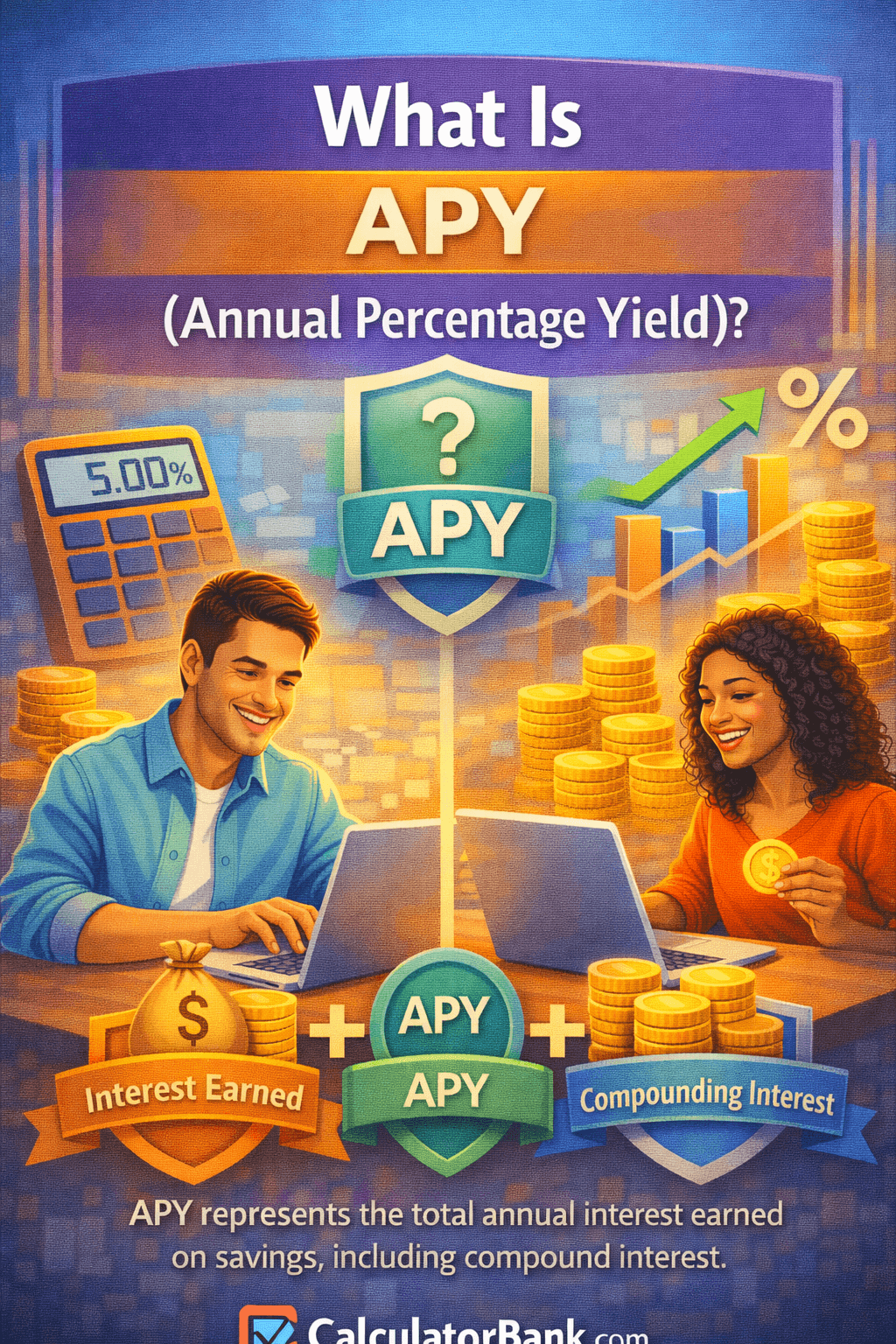
APY stands for Annual Percentage Yield, and it’s the standard way banks in the United States report interest rates on savings accounts. Unlike a simple interest rate, APY takes into account how often interest is compounded – or added to your account.
Difference between APY and interest rate: The interest rate is the basic percentage the bank pays you, while APY includes the effect of compounding. For example, a 4% interest rate with daily compounding will have a slightly higher APY than 4% with monthly compounding.
Why APY is the standard in the U.S.: The Truth in Savings Act requires banks to disclose APY rather than just the interest rate. This helps consumers compare different accounts on an equal basis, since APY shows the true annual return including compounding effects.

How Banks Calculate Interest on High-Yield Savings Accounts
Daily Balance Method
Most High Yield Savings Accounts use the daily balance method to calculate interest. This means the bank calculates interest based on your account balance at the end of each day.
Here’s how it works:
- The bank looks at your balance at the end of each day
- Applies the daily interest rate (your APY divided by 365)
- Adds that interest to your balance
- Repeats this process every day
Daily Compounding Explained
Daily compounding means that interest is calculated and added to your account balance each day. This is different from monthly or annual compounding, where interest is only added once per month or once per year.
With daily compounding, you earn interest on your interest much faster. For example, if you have $1,000 in an account with 4% APY, you’ll earn a small amount of interest each day, and the next day’s interest calculation will be based on your new, slightly higher balance.
Monthly Interest Crediting
While interest is calculated daily, most banks credit (add) the interest to your account on a monthly basis. This means you’ll see the interest appear in your account once per month, even though it’s being calculated every day.
Some banks may credit interest more frequently, but monthly crediting is the most common practice in the U.S. banking system.
Compounding Frequency and Its Impact
Daily vs Monthly vs Annual Compounding
The frequency of compounding makes a significant difference in your total earnings:
- Daily compounding: Interest is calculated and added to your balance daily
- Monthly compounding: Interest is calculated daily but added to your balance once per month
- Annual compounding: Interest is calculated daily but only added to your balance once per year
How Compounding Affects Total Earnings
Let’s see how this works with an example. If you have $10,000 in an account with 4% APY:
- Daily compounding: You’d earn about $406.05 in interest over one year
- Monthly compounding: You’d earn about $405.92 in interest over one year
- Annual compounding: You’d earn exactly $400 in interest over one year
The difference may seem small over one year, but it adds up significantly over time due to the power of compound interest.
Why Most U.S. HYSAs Use Daily Compounding
Most High Yield Savings Accounts in the U.S. use daily compounding because:
- It provides the most accurate reflection of how your money grows
- It offers slightly higher returns than less frequent compounding
- It’s become the industry standard for competitive online banks
- It helps attract customers looking for maximum growth
The Formula Behind Interest Calculation
Basic APY Formula
The formula for calculating APY is:
APY = (1 + r/n)ⁿ – 1
Where:
- r = annual interest rate (decimal)
- n = number of compounding periods per year
For daily compounding, n = 365.
Compound Interest Formula
The compound interest formula shows how your balance grows over time:
A = P(1 + r/n)ⁿᵗ
Where:
- A = the future value of the investment/loan, including interest
- P = the principal investment amount (initial deposit)
- r = annual interest rate (decimal)
- n = number of times interest is compounded per year
- t = number of years
How These Formulas Apply to Savings Accounts
These formulas help you understand exactly how your money will grow in a High Yield Savings Account. You can use online calculators like calculatorbank.com/high-yield-savings-account-calculator/ to see how different APYs and time periods affect your total earnings.
Example of Interest Calculation
Let’s walk through a conceptual example of how interest calculation works:
Imagine you deposit $5,000 into a High Yield Savings Account with 4% APY that compounds daily.
Day 1: Your balance is $5,000. The bank calculates daily interest: 4% ÷ 365 = 0.0109589% each day
- Interest earned: $5,000 × 0.000109589 = $0.5479
Day 2: Your new balance is $5,000.55. The bank calculates interest on this new balance:
- Interest earned: $5,000.55 × 0.000109589 = $0.5479 (slightly more than Day 1)
This process repeats every day. At the end of the month, the bank adds up all the daily interest amounts and credits them to your account as one monthly interest payment.
Over time, you can see how the interest you earn each day gradually increases because it’s being calculated on a growing balance.
Factors That Affect How Much Interest You Earn
Account Balance
The more money you have in your High Yield Savings Account, the more interest you’ll earn. This is because interest is calculated as a percentage of your balance.
APY Changes Over Time
Interest rates on High Yield Savings Accounts are variable, meaning they can change based on:
- Federal Reserve rate decisions
- Bank competition
- Economic conditions
When rates change, your interest earnings will change accordingly.
Deposit and Withdrawal Timing
The timing of your deposits and withdrawals affects your interest calculation:
- Deposits made early in the month earn more interest
- Withdrawals made early in the month reduce the balance that earns interest
- Banks typically use the ending daily balance for interest calculations
Length of Time Funds Stay in the Account
The longer your money stays in the account, the more it benefits from compound interest. This is why starting to save early is so powerful – time allows compound interest to work its magic.
How Often Interest Rates Change
Variable vs Fixed Rates
High Yield Savings Accounts have variable rates, meaning they can change over time. This is different from certificates of deposit (CDs), which typically have fixed rates for their term.
Impact of Federal Reserve Rate Changes
When the Federal Reserve changes the federal funds rate, it affects how much banks pay for money. This, in turn, affects the interest rates they offer on savings accounts.
How Banks Adjust HYSA Rates
Banks typically adjust High Yield Savings Account rates in response to:
- Federal Reserve rate changes
- Competition from other banks
- Their own financial needs and strategies
When rates go up, your interest earnings increase. When rates go down, your earnings decrease.
Common Misunderstandings About Savings Account Interest
APY vs Advertised Rate Confusion
Many people confuse the interest rate with APY. Remember:
- Interest rate: The basic percentage the bank pays
- APY: The actual annual return including compounding effects
APY is always equal to or higher than the interest rate.
Compounding vs Payout Timing
Compounding happens daily (or as specified by your account), but interest is typically paid out monthly. This means your balance grows daily due to compounding, but you see the interest added to your account monthly.
Interest Calculation vs Interest Payment
Interest is calculated continuously based on your daily balance, but paid out at regular intervals (usually monthly). The calculation happens every day, but the payment happens less frequently.
Summary of How Interest Is Calculated
Interest on High Yield Savings Accounts is calculated using the daily balance method with daily compounding. The bank applies a daily interest rate (your APY divided by 365) to your ending balance each day, and this interest is added to your balance. Most banks credit the accumulated interest to your account monthly.
Why APY and Compounding Matter for Savers
APY and compounding frequency are crucial because:
- APY shows your true annual return
- More frequent compounding means faster growth
- Even small differences in APY can lead to significant differences in total earnings over time
What to Watch When Choosing a High-Yield Savings Account
When comparing High Yield Savings Accounts, pay attention to:
- The APY (not just the interest rate)
- How often interest compounds (daily is best)
- Any fees that might reduce your earnings
- The bank’s history of rate changes
- Minimum balance requirements
Understanding how interest is calculated helps you make informed decisions about where to keep your savings and how to maximize your earnings.